Tuesday, October 15, 2019

INDIA: Pepper growers expect a good crop this year despite weather woes


V Sajeev Kumar Kochi Published on October 14, 2019

Changes in weather pattern have not dampened the hopes of pepper growers in getting better yields this season. They say that production for the 2019-20 crop season would be in the range of 50,000-55,000 tonnes. Last year’s estimated projection was 48,000 tonnes, but the final figure touched 52,000 tonnes.

“We were expecting a good crop in 2019-20 at more than 60,000 tonnes in the wake of growth spike during November and December in the previous year. However, drought-like conditions in March and April, followed by heavy rain and floods, shattered our expectations,” said Kishore Shamji of Kochi-based Kishor Spices.

He also differed with the projections made by the International Pepper Community for the 2019-20 crop season at 47,000 tonnes, saying that the figure could be higher at between 50,000 tonnes and 55,000 tonnes, almost at the same level as last year.

KK Vishwanath, Coordinator, Consortium of Black Pepper Growers Organisation, told BusinessLine that the final figure for the 2019-20 crop season would be available in a month, when the consultative meeting of the Spices Board with all stakeholders to decide on the crop estimate for 2020 is scheduled. “The production figure is likely to be flat this year, but there will be price variations for the crop,” he said.

Official sources said that the Spices Board is awaiting the figure for the 2019-20 crop from the Directorate of Arecanut and Spices Development, Kozhikode, and the report would be placed before the meeting of the Pepper Task Force scheduled to be held in October-end or November first week. In the 2018-19 season, according to DASD figures, black pepper production was around 62,400 tonnes spread over 1.38 lakh hectares.

Rajiv Palicha, Chairman, All India Spices Exporters Forum, said that the overall production in the domestic market this year is likely to be lower due to changes in weather pattern; it may range between 52,000 tonnes and 55,000 tonnes. “It is too early to say anything about the 2020 crop. We may be in a position to get a final figure by November or December,” Palicha said. Referring to rising pepper imports, he said, “We need it for value addition and the prices are also lower.”


According to Shamji, production both in Kerala and Karnataka last year had suffered due to the heavy rain, floods and landslides that destroyed many standing pepper vines.

Domestic prices are currently hovering around R$300-325 a kg, while the price in Sri Lanka is around R$200/kg ($2,800/tonne). This has forced exporters to look at imports rather than depend on the domestic market.
Quoting figures of August, Shamji said India is the second-largest importer of Vietnamese pepper, after the US, shipping in 16,600 tonnes, compared to 35,000 tonnes by the US.

If Sri Lankan pepper imports continue without any restrictions being imposed by the government, he anticipates a further decline in domestic prices, to R$250 per kg.

Even the minimum import price of R$500 per kg imposed by the government to restrict imports and save the domestic pepper growers has not yielded the desired result, as large volume of Vietnamese black pepper routed through Sri Lanka under SAFTA continues to reach Indian shores, flouting all rules, he alleged.

Published on October 14, 2019
https://www.thehindubusinessline.com/economy/agri-business/pepper-growers-expect-a-good-crop-this-year-despite-weather-woes/article29680611.ece


WHATSAPP +5511988027709
MAIL manager@peppertrade.com.br
TWITTER : https://twitter.com/peppertrade

Friday, October 11, 2019

IPC REPORT - EXPORT OF PEPPER BY CHINA


China officially the People's Republic of China (PRC or PR China), is a country in East Asia and the world's most populous country with a population of around 1.44 billion as per October 2019 (source : population.un.org). China is one of the producers of white pepper in the world with cultivation area concentrated in the peninsula of Hainan. As majority of the pepper product in China does not leave the country, China is considered as one of the highest consumers of pepper among pepper producing countries. However, China also exports pepper to various countries in the world.

In 2017, China was reported to have exported a total of 1,311 Mt of pepper from which 43% or 563 Mt of it comprised of whole pepper and 57% or 749 Mt of it ground pepper. China on average exported a total of 109 Mt per month in 2017. The total revenue of China export in 2017 was reported to be as high as USD 14.8 Million, Thus, recording an average price of the total pepper exported by China at USD 9,831 per Mt for whole pepper and USD 12,496 per Mt for ground pepper.


Year 2018 saw an increasing trend in term of quantity of pepper exported by China. China was reported to have exported a total of 2,523 Mt of pepper of which 64% or 1,606 Mt of it comprised of whole pepper and 36% or 916 Mt of it ground pepper. Thus, recording a significant 92% increase in term of quantity as compared to the same period in 2017. The average export of pepper by China was reported to be at 210 Mt per month. In accordance with increasing in terms of quantity, China's revenue from pepper export was reported to have increased by 34% to a total of USD 19.9 Million, recording an average price of the total pepper exported by China at USD 6,046 per Mt for whole pepper and USD 11,158 per Mt for ground pepper or a decrease by 38% and 11% respectively as compared with 2017.


As of July 2019, China was reported to have exported a total of 1,081 Mt which comprised of 692 Mt of whole pepper and 388 Mt of ground pepper. Thus, recording a loss of 23% when compared to the same period in 2018. By the end of July 2019, the total revenue of pepper export by China was reported to have reached USD 7.2 Million, recording a decrease by 41% as compared to the same period in 2018. The average price of the total pepper exported by China as of July 2019 was reported at USD 6,017 per Mt for whole pepper and 7,891 per Mt for ground pepper. Furthermore, as of July 2019, China's top 5 country destinations for its pepper were reported to be North Korea with 343 Mt (a decrease of 35% as compared with the same period in 2018), Hong Kong with 160 Mt (an increase of 37%), United States of America with 153 Mt (an increase of 19%), Germany with 115 Mt (an increase of 92%) and Thailand with 49 Mt (an increase of 12%). 


WHATSAPP +5511988027709
MAIL manager@peppertrade.com.br
TWITTER : https://twitter.com/peppertrade

IPC Market Report No. 41/19, 7 - 11 October 2019


LOCAL MARKET 
Market this week showed mixed response with Sri Lanka recorded the highest increase for its local market price and Viet Nam for its International market price.
In local market, Malabar black pepper was traded with a 1% deficit as compared to the previous week with an average of USD 4,516 per Mt.
Indonesia black and white pepper were reported stable and relatively unchanged at an average of USD 1,624 per Mt and USD 3,284 per Mt respectively.
Malaysian black and white pepper were also reported stable with an average of USD 2,000 per Mt for black pepper and USD 3,513 per Mt for white pepper.
Furthermore, Viet Nam black pepper was reported with a decrease by 1% as compared to the previous week averaging at USD 1,702 per Mt. Viet Nam white pepper was reported to be traded stable with an average of USD 2,626 per Mt.
Recording a 7% spike as opposed to the previous week, Sri Lanka black pepper became the only product which recorded an increase in local market and was traded at an average of USD 2,570 per Mt.
Whilst, China white pepper was reported to be traded with an average of USD 4,635 per Mt.


INTERNATIONAL MARKETIn international market, the trend also showed mixed response as only Viet Nam reported an increase.
FOB price of India black pepper was reported with the same 1% deficit as compared to the previous week at an average of USD 4,797 per Mt.
Indonesia black and white pepper was reported steady with at an average of USD 2,021 per Mt for black pepper and USD 3,891 per Mt for white pepper.
Malaysia black and white pepper continued to be traded stable and unchanged.
Furthermore, Viet Nam black pepper 500 g/l and 550 g/l were reported with an increase by 6% respectively as opposed to the previous week averaging at USD 2,345 per Mt and USD 2,410 per Mt respectively.
Viet Nam white pepper was also reported with an increase by 4% when compared to the previous week averaging at USD 3,495 per Mt.
The increase of Viet Nam prices in international market could be contributed to China buying significant amount of pepper from Viet Nam. As of August 2019, Viet Nam's top country of destination is China.
China traded its white pepper in the international level with an average of USD 4,835 per Mt. 


WHATSAPP +5511988027709
MAIL manager@peppertrade.com.br
TWITTER : https://twitter.com/peppertrade

Monday, October 07, 2019

VIETNAM - a preliminary survey of inventory situation and forecast next year's pepper crop


Through a preliminary survey of inventory situation and forecast next year's pepper crop, we would like to give you some information in the main material areas for references as follows;

1 / Daklak (38,616 hectares) & Daknong (36,300 hectares);
- The total area of these two provinces are 74,916 hectares – occupy around 50% Vietnam's pepper area (148.744 hectares as previous report)
- Due to favorable weather and pepper vines are in the good shape period (new pepper planting from 2013 to 2015), the expected output 2020 will increase by over 10% compared with 2019.
- Total pepper area is almost unchanged because farmers continuing to cultivate/plant new trees to take place of dead pepper vines.

2 / Dong Nai Province (19,022 hectares) & Ba Ria Vung Tau (13,161 hectares);
- These are the two provinces adjacent Ho Chi Minh City, so land prices have increased rapidly since 2017/2018. Many locations increased from 2 to 6 times within 1 - 2 years. Many farmers have sold their pepper plantation or converted their land purpose such as; building factories/warehouses/ for renting... The total area of pepper cultivation is expected to decrease by at least 20%.

3 / Binh Phuoc Province (17,178 hectares);
- Planting area has little change but the weather supporting for new crop. However, due to low prices, farmers did not focus on pepper cultivation as before.

4 / Gia Lai Province (16,267 hectares)
- Since 2017, the pepper plantation of Gia Lai province has continuously decreased sharply due to farmers' inexperience in pepper cultivation, a lot of pepper was dead but farmers could not cultivate another pepper tree due to soil in serious disease and the weather did not support pepper plants in this province.
- Previously, Gia Lai was the pepper capital of Vietnam due to the hot development but now many farmers/collectors… are facing worse financially situation such as; have to sell land/their house/ pepper plantation to pay loans from the bank, black credit ...
- It is expected that production will be decreased by 60% in the next crop and likely pepper crop in Gia Lai province not possible to recover in the next few years.

5/ Another 8,200 hectares in 17 diffirent area;
- 8.200 hectares scattered in many different provinces with constant natural conditions, we temporarily assess the output is similar compared to 2019.


Summary;
- Total output declines in most areas in Vietnam. Only Daklak and Daknong, production is expected continue to increase due to favorable weather conditions, pepper is in a healthy phase although farmers reduce fertilization/pesticides. Currently, these two provinces occupy 50% of Vietnam's pepper area but total production will around 60% - 65% at least in the next crop 2020.

- Although pepper prices now has decreased roughly 25% compared to January 2019, farmers in key areas still suppose pepper as a major agricultural and they could not convert to another agriculture product in nearest future.

- In most of the surveyed farmers/collectors/speculators, there are still has a lot of inventories, even inventories from 2017. Many different forecasts on specific numbers but we will not be surprised if carry over this year is above 70 - 80.000 metric tones. This is also an impact on raw material prices in the coming year.

- Expected Daksong district of Daknong province will be harvested during second half of December 2019. The main crop of Vietnamese pepper remains unchanged after Lunar New Year in February & March 2020.

- Vietnamese pepper quality is improving due to price now very low, almost farmers have to reduce fertilizer, not use pesticides to reduce their production costs.

- The total cultivated area may be reduced from 10% - 15% and crop size maybe reach around 250 – 270.000 metric tones in 2020.

- Price now very attractive and maybe continue come down in peak season next crop, however, the importer/buyers not much risky like before. My own opinion stockpile should be under consideration.

We will continue to update crop/inventory if any changes.


WHATSAPP +5511988027709
MAIL manager@peppertrade.com.br
TWITTER : https://twitter.com/peppertrade

IPC MARKET REPORT No. 40/19, 30 September - 4 October 2019


LOCAL MARKETS
Market this week showed mixed response with Indonesia recorded the lowest deficit for its black pepper. In local market, Malabar black pepper was reported stable averaging at USD 4,565 per Mt. Indonesia black pepper was reported to be traded negatively and was reported with the lowest ever prices in recent years. Recording a 10% deficit as opposed to the previous week at an average of USD 1,622 per Mt. The significant decrease in price of black pepper in Indonesia was as result of harvest period currently in full swing which flooded the market with product. Thus, pressuring the price in the local currency to an average of IDR 23,000 per Kg from IDR 25,500 per Kg in the previous week. Indonesia white pepper was reported with a 1% deficit when compared to the previous week averaging at USD 3,279 per Mt. Malaysian black and white pepper were reported with a 1% deficit as compared to the previous week at an average of USD 2,002 per Mt for black pepper and USD 3,516 per Mt for white peppe r. Furthermore, Viet Nam black and white pepper were reported with a decrease by 2% as compared to the previous week averaging at USD 1,726 per Mt for black pepper and USD 2,625 per Mt for white pepper. Sri Lanka black pepper was reported with a 1% increase as compared to the previous week at an average of USD 2,398 per Mt.

INTERNATIONAL MARKETS
In international market, the trend also showed mixed response as only Viet Nam reported an increase. FOB price of India black pepper was reported steady at an average of USD 4,847 per Mt. Indonesia black pepper was reported with a 9% deficit as compared to the previous week at an average of USD 2,018 per Mt. Whilst, Indonesia white pepper was reported with a 1% deficit when compared with the previous week at an average of USD 3,885 per Mt. Malaysia black and white pepper continued to be traded stable and unchanged. Furthermore, Viet Nam black pepper 500 g/l, 550 g/l and Viet Nam white pepper were reported with an increase by 1% respectively as opposed to the previous week averaging at USD 2,218 per Mt, USD 2,283 per Mt and USD 3,368 per Mt respectively.


WHATSAPP +5511988027709
MAIL manager@peppertrade.com.br
TWITTER : https://twitter.com/peppertrade

Thursday, October 03, 2019

Star Anise Seeds


New crop staraniseeds from Vietnam is available. For this product there are 2 crops (autumn & spring); autumn crop is the far better quality in colour, size and overall appearance. The best growing area is Lang Son, here we find the premium qualities.

Van der Does
http://doesspice.com/


·

Monday, September 30, 2019

Pepper prices falling due to increasing global supply

From the beginning of the year until now, pepper exports recorded a sharp decline in almost all markets, but there were positive signs in the EU.  According to the latest information from the Department of Agricultural Product Processing and Market Development, in the first 8 months of 2019, the estimated export volume of pepper was 220,000 tons (561 million USD), up 27.4% in volume but decreasing 3.8% in value over the same period in 2018. Notably, the average export price of pepper in the period reached 2,556 USD / ton, down 24.5% over the same period in 2018.
The Import and Export Department (Ministry of Industry and Trade) said pepper prices were falling due to increasing global supply. However, in Vietnam, the quality of pepper is affected by excessive use of chemicals and pesticides, so the price is lower than that in other countries.
In the past 2 years, many countries such as Brazil, India, and Indonesia have become competitors to Vietnam in terms of output and quality. In particular, Brazilian pepper is better quality with 80% of the world market selling organic standards.
While the price of pepper is still very low, the cost of producing pepper tends to increase. Vietnam's pepper production cost in 2018 increased by at least 10% compared to 2017. The selling price of pepper decreased by over 30%, causing huge difficulties for pepper growers.
The Agro Processing and Market Development Department said in the first 8 months of 2019 pepper exports to Germany increased: in the first 7 months, reached 8,000 tons, equivalent to USD 23.4 million, up 53.3% in volume and 14.4% in value over the same period in 2018. Germany increased imports of pepper to serve the growing pepper processing industry in this country.
The successful signing of the Vietnam-EU Free Trade Agreement (EVFTA) will be a good opportunity for Vietnam's pepper industry.  As part of the agreement, EU countries commit to eliminating tariffs on pepper products (HS code 09.04) right after it comes into effect. Opportunities for Vietnamese export will increase due to the agreement.
Typically, Metalaxyl chemical residues were found on pepper imported into the European market. Previously, the maximum permitted amount of Metalaxyl chemicals on pepper imported into the EU was 0.1 ppm, but the European Commission (EC) has requested to adjust this level to 0.05 ppm. By 2018, only 46% of Vietnam's pepper has met the export standards. Besides, Vietnam still faces the risk of origin of imported pepper products from third markets. Vietnam imports pepper from other producing countries, accounting for about 10% of Vietnam's total pepper exports, mainly for processing.
In the domestic market, prices of pepper fluctuated in August. Compared to the previous month, prices of pepper in Dak Lak, Dak Nong, Gia Lai and Ba Ria Vung Tau decreased by VND 500 / kg to VND 43,500 - 45,500 / kg. Pepper prices in Dong Nai decreased by VND 1,000 / kg to VND 43,000 / kg.

From https://www.freshplaza.com/article/9148608/pepper-prices-falling-due-to-increasing-global-supply/

Agroberichten Buitenland

Tel: +31 (0)70 379 8911
Email: agroberichtenbuitenland@minlnv.nl 
www.agroberichtenbuitenland.nl

Publication date:

Friday, September 27, 2019

IPC MARKET REPORT No. 39/19, 23 September - 27 September 2019

LOCAL MARKET
Market this week showed mixed response as only India with an increase. In local market, Malabar black pepper was reported with an increase by 1% as compared to the previous week averaging at USD 4,582 per Mt. Indonesia black and white pepper were reported to be traded stable with an average of USD 1,804 per Mt and USD 3,325 per Mt respectively.
Malaysian black and white pepper were reported with a 1% deficit as compared to the previous week at an average of USD 2,025 per Mt for black pepper and USD 3,550 per Mt for white pepper.
Furthermore, Viet Nam black and white pepper were also reported with a decrease by 1% and 6% respectively as compared to the previous week averaging at USD 1,765 per Mt for black pepper and USD 2,669 per Mt for white pepper. The significant decrease in price of white pepper in Viet Nam was contributed to the decreasing in average price of Viet Nam white pepper in the local currency with an average of VND 63,500 per Kg from VND 67,500 per Kg in the previous we ek or a decrease by VND 4,000 per Kg.
Sri Lanka black pepper was reported with a 1% deficit as compared to the previous week at an average of USD 2,377 per Mt. Whilst,
China white pepper was reported to be traded with an average of USD 4,645 per Mt.


INTERNATIONAL MARKET
In international market, FOB prices of most origin were reported stable with only India reported an increase.
FOB price of India black pepper was reported with the same 1% increase as compared to the previous week at an average of USD 4,864 per Mt.
Indonesia black and white pepper were reported steady averaging at USD 2,227 per Mt for black pepper and USD 3,938 per Mt for white pepper.
Malaysia black and white pepper continued to be traded stable and unchanged.
Furthermore, Viet Nam black pepper 500 g/l, 550 g/l and Viet Nam white pepper were also reported stable.
China traded its white pepper in the international level with an average of USD 4,845 per Mt. 


WHATSAPP +5511988027709
MAIL manager@peppertrade.com.br
TWITTER : https://twitter.com/peppertrade


Descrição: Imagem removida pelo remetente.

Tuesday, September 17, 2019

FROM VIETNAM- PEPPER MARKET UPDATE 16TH SEPT 2019.


Vietnam
According to customs and VPA data, Vietnam has exported 19,456 of which 17,460 tons were black pepper and 1,996 tons were white pepper, the exports in August reached 46 million $.
Compared to the previous month, exports decreased by 17.1% in volume and 18.8% in value…

The tightening of border trade in China recently make sharp decrease export to China.
In August, pepper exports to China only 1,312 tons, less 5,000 tons compared to July.
Meanwhile, US pepper imports increased from 3,686 tons in July to 4,635 tons in August. It is also biggest market of Vietnam pepper.
The next major import markets follows as India, Arab, Turkey, Germany ...

Pepper market was down sharply from last week due to a lots of raw material stuck in China border, many container/trucking could not deliver and have to return and kept in Vietnam collectors warehouse.
Border clearance come to a standstill and we don’t know when go smoothly again.
Other information: Many collectors/middleman stockpiling coffee and beginning this month is loan maturity so they have to sell other agriculture product to cover temporary tight financial situation.

Brazil: Pepper price is most competitive as usual due to Real too weak compare with USD.
Difficult to other origin as Vietnam/Indonesia in pepper price when currency still keeping steady.

Indonesia:
Market up significantly when crop 2019 has finished. Business very slow as we heard due to price not competitive.


IPC MARKET RPORT No. 37/19, 9 September - 13 September 2019


LOCAL MARKETS
Market this week showed mixed response.
In local market, Malabar black pepper was reported with an increase by 1% as compared to the previous week averaging at USD 4,604 per Mt.
Indonesia black pepper was reported with a 1% deficit as compared to previous week with an average at USD 1,923 per Mt, In local currency, Indonesia black pepper was traded with an average of IDR 27,000 per Kg decreasing marginally by IDR 500 per Kg. Whilst, Muntok white pepper was reported with an increase by 1% as compared to the previous week averaging at USD 3,419 per Mt.
Malaysian black and white pepper were reported stable averaging at USD 2,062 per Mt and USD 3,604 per Mt respectively.
Viet Nam black pepper was reported with a decrease by 1% as compared to last week, averaging at USD 1,829 per Mt. Whilst, Viet Nam white pepper was reported stable with an average of USD 2,839 per Mt.
Furthermore, Sri Lanka black pepper was reported with a 2% deficit as opposed to the previous week with an average of U SD 2,407 per Mt.
China white pepper was reported stable and unchanged.


INTERNATIONAL MARKETS
In international market, FOB price of India black pepper was reported with the same 1% increase as compared to the previous week at an average of USD 4,884 per Mt.
Indonesia black pepper was reported with a 1% deficit as compared to the previous week averaging at USD 2,364 per Mt. Whilst, Indonesia white pepper was reported with an increase by 1% as compared to the previous week with an average of USD 4,044 per Mt.
Malaysia black and white pepper continued stable and unchanged. Furthermore,
Viet Nam black pepper 500 g/l, 550 g/l and Viet Nam white pepper were reported with a decrease by 2%, 1% and 1% respectively as opposed to the previous week averaging at USD 2,226 per Mt, USD 2,291 per Mt and USD 3,376 per Mt respectively.
China traded its white pepper stable in the international level with an average of USD 4,975 per Mt.

Friday, September 13, 2019

Brazilian Cloves Crop & Market


New Cloves crop in Bahia is a step away of start harvesting

Prices are high at the moment for what is left from the last season - around R$ 24.00 per kilo small lots and weak quality sold to local consumption. If processed for export a loss of 30% should be considered for cleaning, selecting and packing.
In dolar terms it corresponds today to U$ 6.00/kg. (1U$ = 4R$)

Regarding international trade Brazilian cloves ever follows the price trend of MZC origin with some discount depending on the volumes offered and demanded.

The 2019/2020 crop forecast is estimated at a maximum of 5 thousand tons and if realized will be an average crop. Must be considered that some 700 to 800 tons are sold to the local consumption

The maximum harvested in Brazil was in 2013 and reached 9 thousand tons.

ORION FEITOSA

Tuesday, September 10, 2019

IPC Market Report No. 36/19, 2 September - 6 September 2019


LOCAL MARKETS
Market this week showed mixed response with a rather negative outlook as only black pepper Indonesia reported an increase.
In local market, Malabar black pepper was traded with a 1% deficit as compared to the previous week with an average of USD 4,581 per Mt.
Indonesia black pepper was reported with a 2% increase as compared to previous week with an average at USD 1,939 per Mt, the increase of black pepper price in Indonesia could be contributed by strengthening of Indonesian Rupiah against the US Dollar.
Whilst, Muntok white pepper was traded with a 1% deficit as compared to the previous week with an average of USD 3,384 per Mt. In local currency, Muntok white pepper was traded with an average of IDR 48,000 per Kg decreasing marginally by IDR 500 per Kg.
Malaysian black and white pepper were reported with the same 2% deficit as opposed to the previous week averaging at USD 2,060 per Mt and USD 3,609 per Mt respectively as the price in local currency dropped to an average of MYR 8.6 per Kg and MYR 15.1 per Kg respectively.
Viet Nam black pepper was also reported with a decrease by 1% as compared to last week, averaging at USD 1,845 per Mt. Whilst, Viet Nam white pepper was reported stable with an average of USD 2,838 per Mt.
Furthermore, Sri Lanka black pepper and China white pepper were reported stable with an average of USD 2,451 per Mt and USD 4,775 per Mt respectively.

INTERNATIONAL MARKET
In international market, FOB price of India black pepper was reported with the same 1% deficit as compared to the previous week at an average of USD 4,858 per Mt.
Indonesia black pepper was reported with an increase by 2% as compared to the previous week averaging at USD 2,380 per Mt. Whilst, Indonesia white pepper was reported stable with an average of USD 4,003 per Mt.
Malaysia black and white pepper continued stable and unchanged.
Furthermore, Viet Nam black pepper 500 g/l, 550 g/l and Viet Nam white pepper were also reported stable with an average of USD 2,260 per Mt, USD 2,325 per Mt and USD 3,410 per Mt respectively. China also recorded a stable international trade for its white pepper with an average of USD 4,975 per Mt.

/>


WHATSAPP +5511988027709
MAIL manager@peppertrade.com.br
TWITTER : https://twitter.com/peppertrade

Spice purveyor Schiff acquires Golombeck in expansion move


By Emily Bader
Totowa | Sep 5, 2019 at 5:00 am


Schiff Foods, a Totowa-based purveyor of whole spices, ground spices and seasonings, announced Wednesday it has acquired Morris J. Golombeck, a Brooklyn-based importer and exporter of high-quality spices and herbs.

Schiff, which was founded in 1949 selling food condiments in Brooklyn, moved to Totowa in 1998 to expand its business to include seeds, herbs, dehydrated vegetables, onion and garlic, seasoning blends, and more. It currently has a 300,000-square-foot warehouse with 30,000 square feet of cold storage dedicated to delicate spices and 15,000 square feet for production.

The combined companies will increase Schiff’s capacity, flexibility and technology, it said.

“The shared values and common goals of Schiff and Golombeck makes this alliance a formidable entity that will anchor our position as a major source for quality spices,” a spokesperson for Schiff Foods said. “The Golombeck team will continue to be an integral part of the Schiff management team, assuring customers that they will continue to enjoy the same personal relationships they have come to expect from an industry leader.”

The main warehouse in Totowa will be expanded and upgraded further to streamline production and distribution, the spokesperson said.

Financial terms were not disclosed.


WHATSAPP +5511988027709
MAIL manager@peppertrade.com.br
TWITTER : https://twitter.com/peppertrade

Thursday, August 29, 2019

Cassia - Vietnam Market


Below is the average price fluctuation of cigarette cassia on market compiled from main cassia factories in Vietnam from 22-Dec-2016 to present.
The low price peaks on chart are that there were factories with surplus goods offered price lower than market at that time.
This Autumn-2019 cassia crop has come but farmers have exploited little because the output rate from fresh to dry is lower than normal, so it is expected that price of cigarette cassia will remain high until the new crop in March 2020.


Mr Vo – TPH


WHATSAPP +5511988027709
MAIL manager@peppertrade.com.br
TWITTER : https://twitter.com/peppertrade


Hand Picked Cloves 2019 crop

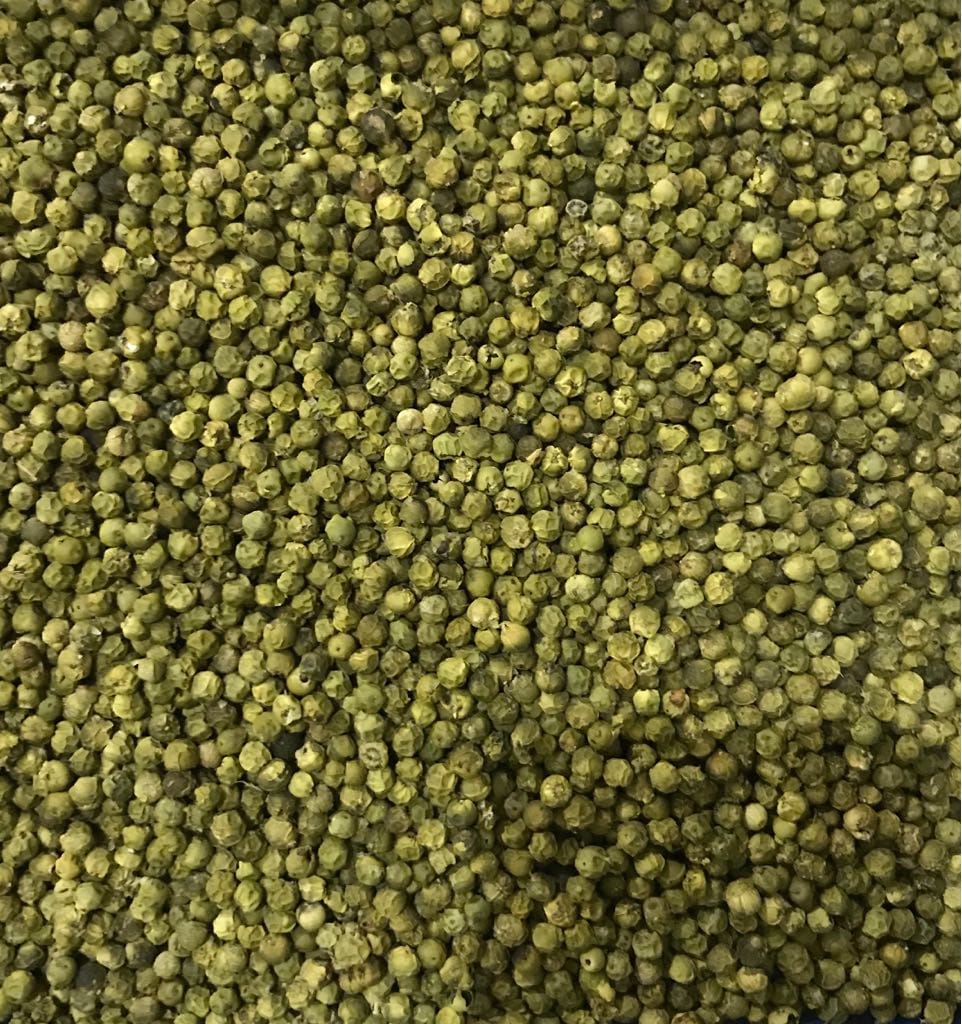
Dehydrated Green Peppercorns

Wednesday, August 28, 2019

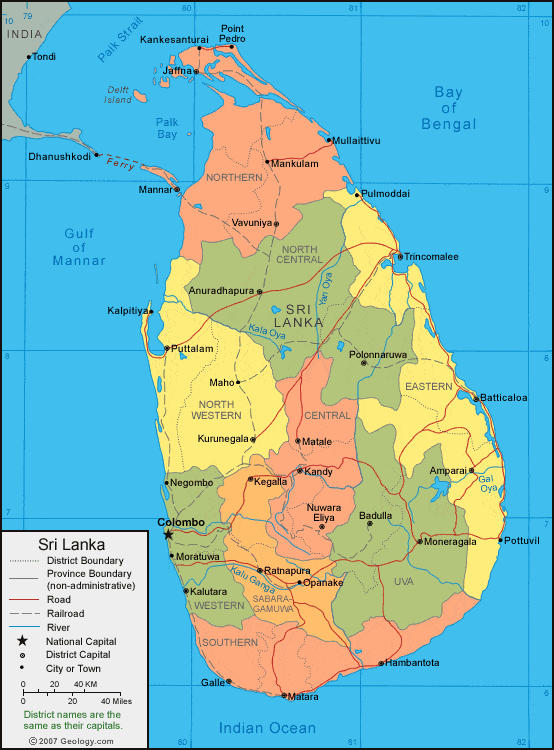
SRI LANKA - Spices industry affected by falling prices


 The biggest problem faced by the spices industry is the present declining prices, lamented Rumesh Jayasuriya, Chairman, Spices and Allied Products Producers and Traders Association (SPPTA), speaking at the 35th AGM of the SPPTA held at Ramada Hotel Colombo, last week.

By Quintus Perera

27 August 2019

The biggest problem faced by the spices industry is the present declining prices, lamented Rumesh Jayasuriya, Chairman, Spices and Allied Products Producers and Traders Association (SPPTA), speaking at the 35th AGM of the SPPTA held at Ramada Hotel Colombo, last week.

He pointed out that the industry has to improve unrestrained innovation and show continuous improvements among growers, plantations, processors, brokers, exporters, etc and noted that the international market has been transformed into a borderless technology-driven market place.

He indicated that the consumers world over are knowledgeable and discerning as they wanted experiences and products that reflect their fast-paced lifestyles and convenience. 

On the sidelines of the event, Mr. Jayasuriya told the Business Times that the decrease in the pepper prices could be identified as the main reason for the downfall of spices prices as the Indian Government has imposed a minimum import price (MIP) for black pepper.  That is Indian Rs. 500 (Rs.1,250) per kg exported to India.

The imposition of this MIP, he said has made it technically difficult now to export black pepper to India and asserted that earlier these exports were not subject to a MIP in India. He said that the industry is rather concerned of this new development and blamed the government for not negotiating with the Indian Government for its removal.

He said that the delay in the certificate by ISFTA (Into-Sri Lanka Free Trade Agreement) and the SFTA (South Asian Free Trade Agreement) to certain spices such as nutmeg and pepper is also another constraint.

The high cost of production is also another issue where they find difficulties in competing in the international market, as he said that the cost of production is very low in other exporting countries.

He said that there is another danger emerging – that is the illegal importation of spices as there were several occasions of such imports being detected.  He was worried that there is no proper legal mechanism to stop illegal import of spices and no proper legal action has been taken to punish those wrongdoers. 

More than 70 per cent of spice exports are to Asian and West Asian destinations while the balance goes to Europe and North America, he said.

Dr. A.P. Heenkende, Director General, Department of Export Agriculture, in his keynote address said that despite challenges, spice and allied products is a major contributor in exports.

It was 48,331 metric tonnes (Mt) in 2018 compared to 59,000 Mt in 2017 with the drop attributed to the decline in the export of cloves and Areca nuts. Cinnamon exports grew from around 2016. 

He said that US was the main buyer of Cinnamon leaf and bark oils, Citronella oil, Ginger oil and Lemon grass oil in 2018. France, Canada, India, Spain and Germany were the main buyers of Cardamom oil, Clove oil, Nutmeg oil, Pepper oil and Vanilla oil in 2018.

The average annual farm-gate price of Coffee, Clove, Cinnamon quills, Mace, Cardamom and Betel had increased in 2018 while betel exports registered a high price in 2018, he indicated.

He cautioned that Sri Lanka has to rethink on how to find a long term solution for this major problem in the spice sector and said that the government has taken policy decisions regarding the complete ban on imports of Cinnamon, black pepper, Nutmeg, Turmeric and Areca nut.

Ghulam Chatoor, Founder Chairman, SAPPTA, was the guest of honour at the occasion.

http://www.sundaytimes.lk/article/1100123/spices-industry-affected-by-falling-prices


------------------------------------------


WHATSAPP +5511988027709
MAIL manager@peppertrade.com.br
TWITTER : https://twitter.com/peppertrade

------------------------------------------


Tuesday, August 27, 2019

Kerala farmers back to cardamom cultivation as the price hits a record high


Published: 26th August 2019 


Kerala’s reputation as the land of spices goes back at least 3,000 years. Here, Express delves into the aromatic world of spices with a special focus on Kerala.
By Express News Service

Cardamom, called the queen of spices, proved worthy of its title when it fetched a record price in the market this year and brought good tidings to Kerala farmers who are otherwise affected by the vagaries of the weather.

With the price hitting Rs 6,000/kg, cardamom growing areas saw people buying acres of farms and those who had turned to other crops returning to cultivate the green gold. Kerala’s reputation as the land of spices goes back at least 3,000 years. Here, Express delves into the aromatic world of spices with a special focus on Kerala.

SPICE GARDEN OF INDIA

Kerala is known as the spice garden of  India. It is the largest producer of small cardamom. It is also famous for black pepper, clove, ginger, cinnamon and Malabar tamarind
Though farmers with small holdings do cultivate spices, most of the produce comes from large plantations
Traders from ancient Phoenicia made tours to Kerala to carry back spices to Mediterranean lands. Pepper, cardamom, cinnamon, ginger, cloves and more -- the spices were used to add flavour to food and wine and preserve meat during winters
Apart from traditionally grown spices, Kerala farmers have taken to growing spices such as vanilla, oregano, rosemary, thyme, basil, mint, bay leaf and sage.

YIELD: WHY THE DROP 

In the case of pepper, ginger, turmeric, nutmeg and cardamom, there has been a decrease in productivity in the state due to adverse weather conditions like long dry spells and short periods of intense rainfall
    For cardamom, tropical, hot and humid climates are suitable. Ideal humidity level is 75%. For the past few years, Kerala has been receiving only 40% of its share of summer rainfall.
A deficit of 60% seriously affected the yield
    The long dry spell, at a time when spiking and pollination need to happen, followed by heavy rain led to a drop in yield of both pepper and nutmeg. Flooding spelt doom for nutmeg plantations in major production centres like Ernakulam
In the case of ginger, the huge disparity in market price and the cost of production saw many farmers ditching the crop. Ginger farmers from Kerala have shifted to Karnataka’s Western Ghats districts and Malenadu region. Ginger crop is disease-prone.


PRICE: WHY THE RISE

The sudden spurt in cardamom prices has been due to the fall in production, says Dr Muthuswamy Murugan, professor and HoD, Cardamom Research Station at Pampadumpara in Idukki. “Due to adverse weather conditions, the production has fallen by 25% to 35%.”
Production of green cardamom has fallen from 25,000 tonnes to 10,000 to 12,000 tonnes in the past few years.
The average price of cardamom reached Rs 4,000 this season and it presently commands a price of Rs 2,900 to Rs 3,000 per kg.
In the case of nutmeg and pepper, the price is holding steady though there is competition from imports.

EXPORTS: REASONS TO WORRY

India has a 45% share in the global market for spices, but concerns over adulteration and excess pesticide use are posing a threat
Several countries have already raised complaints  – want India to ensure quality or lose business.
According to Dr Muthuswamy Murugan, the export of spices, especially cardamom, will not see a surge in the future due to the huge amount of pesticides being used by farmers.
According to Jojo George, MD, KCPMC Agrisolutions, the low exports have not hit spice traders. “The domestic market is robust and the huge demand in the country for small cardamom has kept the trade on an upward swing.”


Indian spices have been able to record huge gains in volume and value. Spice exports have recorded substantial growth in the past five years. During 2017-18, a total of 10,28,060 tonnes of spices and spice products valued at Rs 17,929.55 crore were exported from the country as against 9,47,790 tonnes valued at around Rs 17,600 crore during 2016-17 _ thus registering an 8% increase in volume.

Export figures of major spices in 2017-18

    16,840 tonnes Pepper
    5,680 tonnes Cardamom(small)
    22,605 tonnes Ginger
    1,07,300 tonnes Turmeric
    5,500 tonnesNutmeg and mace

http://www.newindianexpress.com/states/kerala/2019/aug/26/kerala-farmers-back-to-cardamom-cultivation-as-the-price-hits-a-record-high-2024295.html


------------------------------------------


WHATSAPP +5511988027709
MAIL manager@peppertrade.com.br
TWITTER : https://twitter.com/peppertrade

------------------------------------------


Monday, August 26, 2019

IPC MKT REPORT 34/19, 19 August - 23 August 2019

Local Market

Market this week showed mixed response with a rather stable outlook as only Malaysia recorded deficit. In local market, Malabar black pepper was reported stable with an average of USD 4,692 per Mt. Indonesia black pepper was also reported steady with an average of USD 1,896 per Mt. Whilst, Indonesia white pepper was reported with an increase of 1% as compared with the previous week, averaging at USD 3,406 per Mt. In local currency, Muntok white pepper was traded with an average of IDR 48,500 per Kg increasing marginally by IDR 500 per Kg. This week, Malaysian black and white pepper was reported with a decrease by 3% and 1% respectively as opposed to the previous week averaging at USD 2,267 per Mt for black pepper and USD 3,840 per Mt for white pepper.
Viet Nam black and white pepper were reported stable and unchanged.
Sri Lanka black pepper reported with an increase by 1% as compared to the previous week averaging at USD 2,509 per Mt while China white pepper was reported stable with an average of USD 4,795 per Mt.

International Market
In international market, FOB price of India black pepper was reported steady with an average of USD 4,971 per Mt.
Indonesia black pepper was reported stable and unchanged. Whilst, Indonesia white pepper was traded with 1% increase as compared to the previous week with an average of USD 4,026 per Mt. Contrary to the farm gate price, Malaysia FOB prices for black and white pepper continued stable and unchanged. Furthermore, Viet Nam black pepper 500 g/l, 550 g/l and Viet Nam white pepper were reported stable averaging at USD 2,270 per Mt, USD 2,335 per Mt and USD 3,420 per Mt respectively.
China white pepper was also reported stable and unchanged averaging at USD 4,995 per Mt.


------------------------------------------


WHATSAPP +5511988027709
MAIL manager@peppertrade.com.br

------------------------------------------